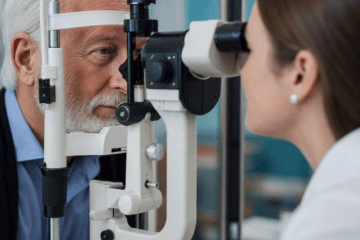
Astigmatism Explained: What It Is and How Glasses and Toric Contact Lenses Correct It
Astigmatism is a common focusing condition that can make vision look blurred, stretched or slightly distorted. It can affect people of any age and may occur on its own or alongside short-sightedness or long-sightedness. In most cases it is corrected successfully with glasses or contact lenses.
What is astigmatism?
For clear vision, light needs to be focused accurately onto the retina at the back of the eye. Astigmatism means that the eye does not focus light evenly in every direction. This is often because the front surface of the eye, the cornea, has a different curve in one direction from another. The eye’s internal lens can also contribute.
People sometimes describe this as the eye being shaped more like a rugby ball than a football. That comparison is useful, but it is only a simplified way of explaining the optics. Astigmatism varies greatly between individuals and may be mild or more noticeable.
What symptoms can astigmatism cause?
Possible symptoms include:
- blurred or distorted vision at distance, near, or both
- difficulty seeing fine detail
- eyes that feel tired after reading or screen work
- headaches linked with visual effort
- screwing up the eyes to see more clearly
- haloes, glare or reduced clarity when driving at night
Mild astigmatism may cause little or no obvious difficulty. The only reliable way to find out whether it is present, and whether correction would help, is through an eye examination.
How does astigmatism appear on a glasses prescription?
A spectacle prescription may include three main measurements: sphere, cylinder and axis.
- Sphere describes short-sightedness or long-sightedness.
- Cylinder shows the amount of astigmatism correction required.
- Axis shows the direction in which that cylinder correction needs to be positioned.
The axis is written as a number between 1 and 180 degrees. It does not describe the strength of the astigmatism; it describes its orientation. Two people can have the same cylinder power but require different axis measurements.
How do glasses correct astigmatism?
Spectacle lenses for astigmatism contain different optical powers in different directions. This allows the lens to compensate for the uneven focus created by the eye and bring light to a clearer focus on the retina.
The correction is built into the lens according to the cylinder and axis values on the prescription. Because glasses remain in a fixed position in front of the eyes, the orientation of the correction also remains fixed. Modern spectacle lenses can combine astigmatism correction with short-sighted, long-sighted, reading or varifocal prescriptions. Our spectacle lenses page explains more about lens options.
Can contact lenses correct astigmatism?
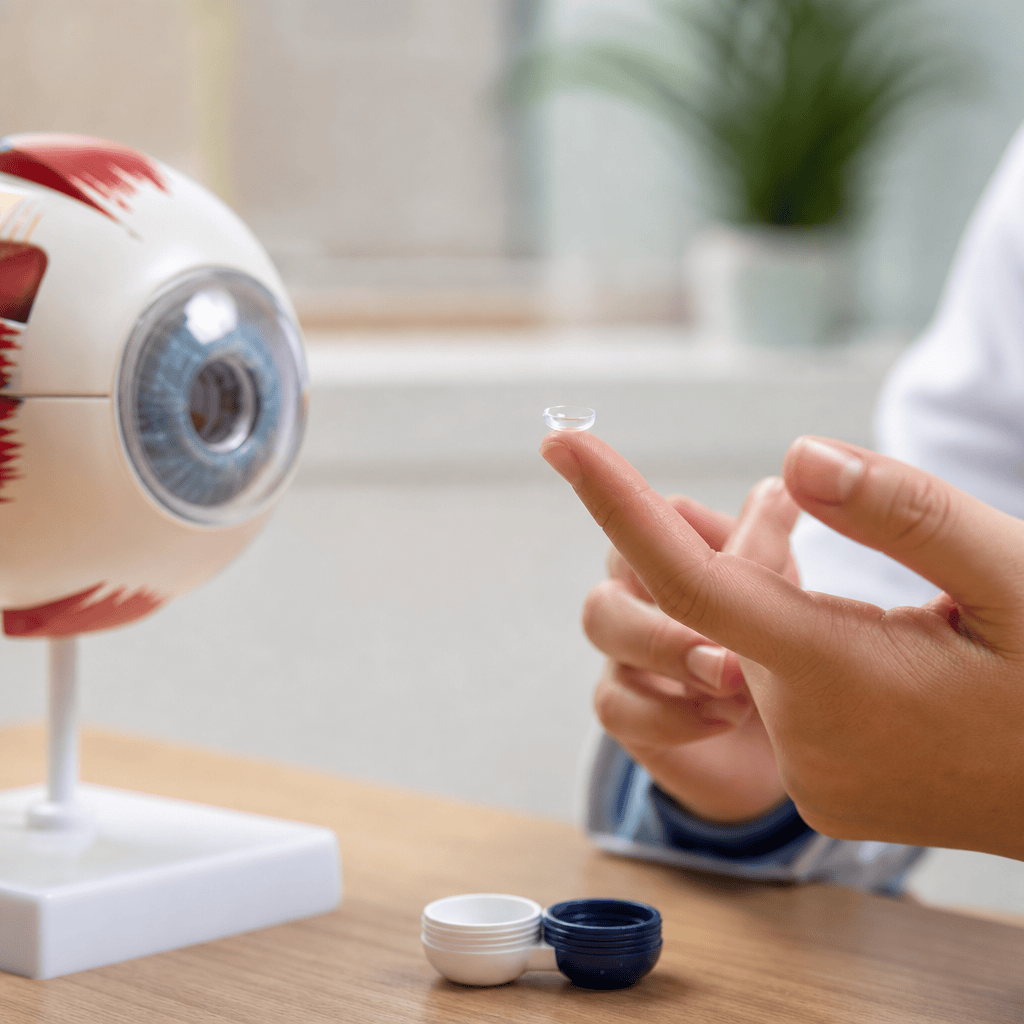
Yes. Many people with astigmatism can wear contact lenses. Contact lens manufacturers commonly use the word toric for soft contact lenses designed to correct astigmatism.

A toric contact lens has different powers in different parts of the lens, rather than one identical power all the way around. It therefore needs to sit in the correct orientation on the eye. Manufacturers use different stabilising designs so that the lens settles into the intended position after blinking.
This stability matters. If a toric lens rotates too much, the axis of the correction moves away from the position required by the eye and vision can become less clear or fluctuate. During a contact lens fitting, the optometrist checks not only the power but also the fit, movement, comfort and rotational position of the lens.
Does everyone with astigmatism need toric contact lenses?
Not always. Very small amounts of astigmatism may sometimes be managed with a standard spherical contact lens, depending on the overall prescription, visual needs and lens design. For more significant astigmatism, a toric lens is often more appropriate. Some rigid gas-permeable lenses can also correct astigmatism through their shape and the tear layer between the lens and the eye.
The best option depends on your prescription, corneal shape, tear film, wearing pattern and the health of the front surface of your eyes. A contact lens prescription is therefore not simply copied from a glasses prescription. It requires a separate assessment and fitting. Read more about our contact lens service in Worcester.
Can astigmatism change?
Astigmatism can remain stable for long periods, but it may also change gradually. Changes can occur as the eye develops, with age, after eye surgery or because of changes to the cornea. A noticeable or rapid change should be assessed rather than assumed to be a routine prescription change.
Astigmatism FAQs
Is astigmatism an eye disease?
No. Astigmatism is usually a refractive or focusing condition, like short-sightedness and long-sightedness. An eye examination also checks the health of the eyes and helps distinguish routine astigmatism from less common corneal problems.
Can children have astigmatism?
Yes. Children can have astigmatism, and some may not realise their vision is blurred. Regular eye examinations are important because clear vision supports learning and visual development.
Are toric contact lenses difficult to wear?
Many people wear them very successfully. As with any contact lens, comfort and vision depend on choosing a suitable design, achieving a good fit and following the recommended wearing and replacement schedule.
Should I arrange an eye examination?
Arrange an examination if your vision is blurred, you are experiencing headaches or eye strain, your current glasses no longer feel right, or your contact-lens vision fluctuates. You can contact Actons Opticians to arrange an appointment or ask about a contact lens assessment.